
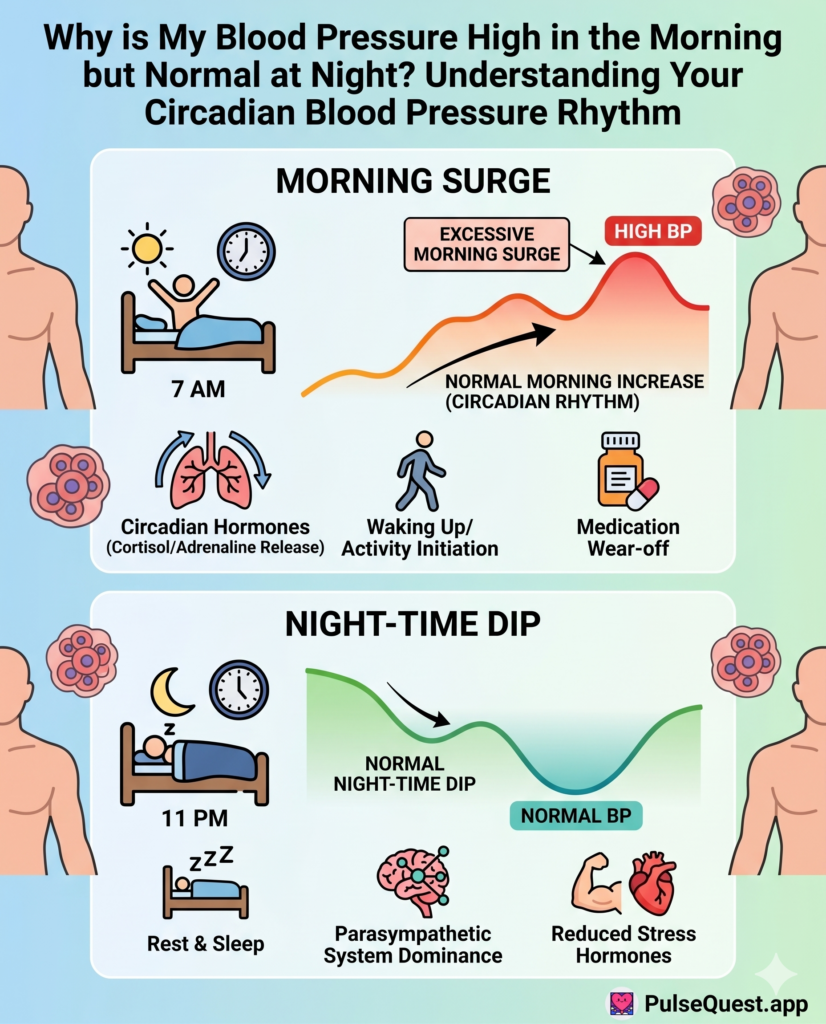
Blood pressure typically follows a circadian rhythm, naturally rising in the early morning hours before you wake up and decreasing at night during sleep. This morning increase, known as the “morning surge,” can be intensified by factors like sleep apnea, high salt intake before bed, or “masked hypertension,” making it critical to track these patterns for your doctor.
The Emotional Toll of the “Morning Spike”
There is a specific kind of frustration that comes with waking up, feeling rested, and then seeing a high reading on your monitor. It feels like a betrayal by your own body. You might wonder if your medication isn’t working or if you did something wrong the night before. In 2026, we know that these morning readings are often the most accurate reflection of your cardiovascular risk, yet they are the ones that cause the most anxiety.
The goal isn’t just to see lower numbers; it’s to have the peace of mind that comes from understanding why your numbers fluctuate.
Common Reasons for Morning Hypertension
Understanding the “why” is the first step toward control. Clinical research identifies several primary triggers for a sharp morning surge:
- Circadian Rhythm: Your body naturally releases hormones like adrenaline and cortisol in the early morning to prepare you for the day, which can raise BP.
- Medication “Trough” Periods: If you take medication in the morning, its effects may be wearing off by the following morning.
- Lifestyle Triggers: High sodium intake at dinner or alcohol consumption can lead to significantly higher readings the next day.
- Sleep Quality: Conditions like obstructive sleep apnea (OSA) prevent your BP from “dipping” at night as it should.
How to Track Your Morning Surge Effectively
To provide your doctor with actionable data, your logging technique must be consistent.
- The 5-Minute Rule: Sit quietly for 5 minutes before your first morning measurement.
- Empty Your Bladder: A full bladder can spike systolic pressure by 10–15 mmHg.
- Log Before Coffee: Caffeine can cause temporary spikes that mask your true resting morning average.
- Use Pulse Quest for Trends: Manually comparing morning vs. evening logs is difficult. Pulse Quest automatically categorizes your “Morning” and “Evening” readings so you can see the exact size of your morning surge at a glance.
When Should You Be Concerned?
While a small surge is normal, a significant gap between your evening and morning averages can be a “red flag” for cardiovascular events.
Clinical Note (2026): If your morning average is consistently above 130/80 mmHg, it is time to discuss a potential medication adjustment with your healthcare provider.
Stop wondering and start knowing. Download Pulse Quest BP Health Tracker to visualize your morning trends and share a professional 7-day report with your clinic.
References
- American Academy of Family Physicians (AAFP). (2021). Home blood pressure monitoring.
- PMC. (2026). Updates in the 2025 AHA/ACC Hypertension Guideline.
- Pfizer. (n.d.). How to monitor your blood pressure.