Category: Digital Health Tools

  • How to track morning blood pressure spikes at home | Pulse Quest

    How to track morning blood pressure spikes at home | Pulse Quest

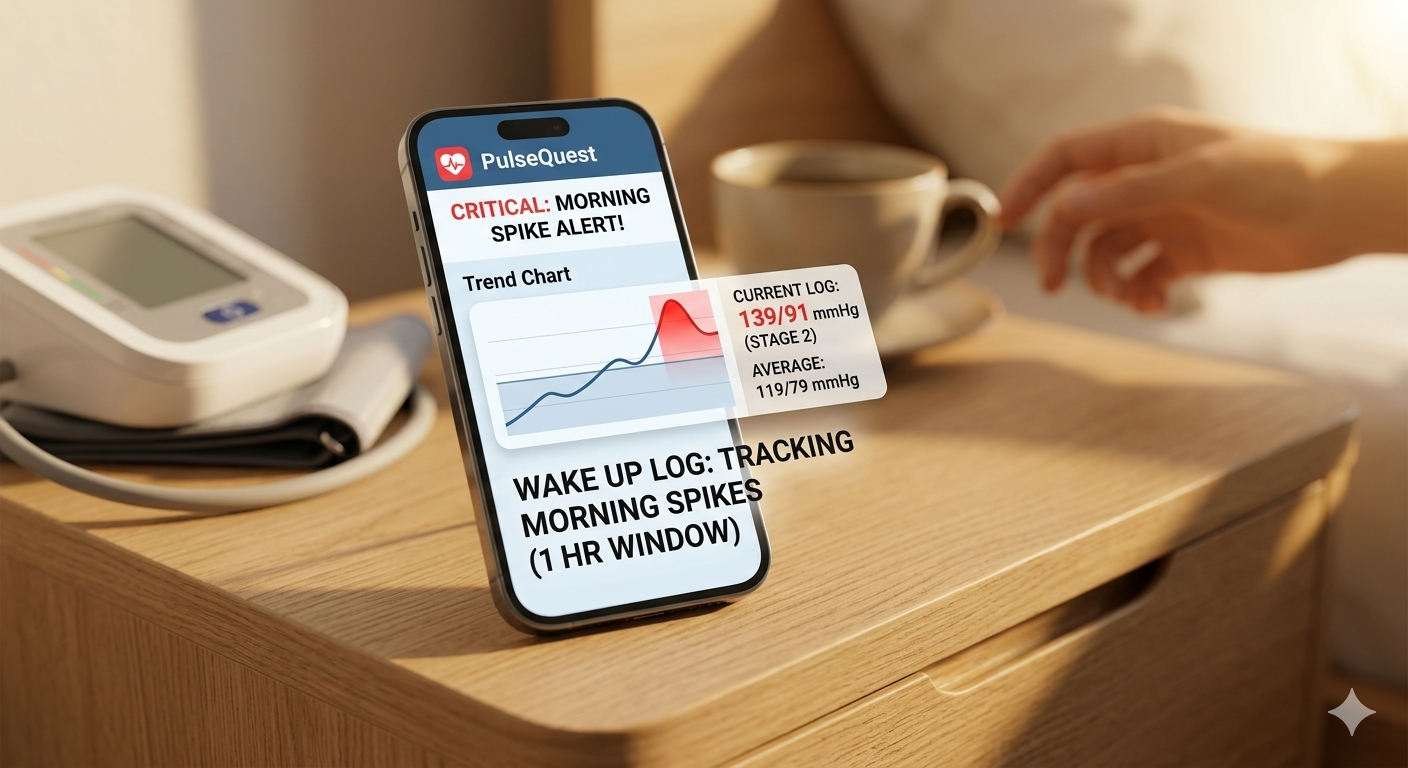
    To accurately track morning blood pressure spikes, you should take your measurements within one hour of waking, after emptying your bladder but before taking medication or consuming caffeine. Consistently logging these early readings helps identify “masked hypertension,” providing a 90% sensitive view of your cardiovascular risk that is often missed during standard office visits.


    In the 2026 clinical landscape, the “Morning Surge” is recognized as a period of high cardiovascular risk. While blood pressure naturally rises upon waking, an exaggerated spike can be a precursor to serious events like stroke or heart attack.

    What is Masked Hypertension?

    Masked Hypertension is the opposite of “White Coat Hypertension”. While your clinic numbers may appear perfect, your morning home readings could be in the Severe Hypertension zone. Without a tool like PulseQuest to track these trends, this risk remains invisible to your physician.


    Tracking morning spikes requires a strict routine. PulseQuest utilizes Habit Architecture to ensure you log during this critical window:

    • The “One-Hour” Rule: Log within 60 minutes of waking.
    • The Pre-Caffeine Buffer: Take your reading before your first cup of coffee, as caffeine can artificially spike systolic pressure.
    • The Bladder Factor: Ensure your bladder is empty; a full bladder can add 10–15 mmHg to your reading.

    Your PulseQuest Doctor Report automatically highlights the difference between your morning and evening averages. When reviewing your PDF with your doctor, focus on these 2026 titration goals:

    1. Morning vs. Evening Delta: Is there a significant gap between your waking and bedtime readings?
    2. Medication Timing: Does your current treatment plan cover the early morning hours effectively?
    3. The 120/80 Target: Are your morning spikes consistently pushing you out of the 2026 “Normal” range?

    Internal Links

    References

    • American Academy of Family Physicians (AAFP). (2021). Home blood pressure monitoring.
    • PMC. (2026). Updates in the 2025 AHA/ACC Hypertension Guideline.
    • StatPearls. (2026). Blood pressure measurement.
    • PulseQuest: BP Health Tracker Internal Documentation (2026).

  • Why do doctors ask for a 7-day blood pressure log?

    Why do doctors ask for a 7-day blood pressure log?

    Doctors require a 7-day blood pressure log because a single reading is often influenced by “white-coat” anxiety or daily stress, whereas a weekly average provides a stable 90% sensitive view of your true cardiovascular health. This 7-day cycle allows physicians to see morning and evening fluctuations, which are critical for accurately titrating medication based on 2026 clinical standards.


    In 2026, the clinical landscape has shifted away from relying on isolated in-office measurements. According to the 2025 AHA/ACC guidelines, home monitoring is now considered significantly more specific (84%) for identifying patterns like masked hypertension.

    A 7-day log is the gold standard because:

    • It captures variability: Blood pressure is dynamic; it changes based on sleep, salt intake, and stress.
    • It eliminates “Outliers”: Guidelines recommend omitting the first day’s readings as they are often higher due to user acclimation.
    • It reveals Circadian Rhythm: Seeing the difference between morning and evening readings helps doctors identify “non-dippers” who are at higher risk for stroke.

    Manually calculating averages is tedious and prone to error. PulseQuest was built to handle the heavy lifting for you.

    Automated Clinical Averages

    Unlike a standard spreadsheet, the PulseQuest Doctor Report automatically calculates your systolic and diastolic averages across the week. This means when you hand the PDF to your doctor, they don’t have to spend 10 minutes with a calculator—they can make a treatment decision in 10 seconds.

    Built-In Habit Architecture

    The hardest part of a 7-day log is staying consistent. PulseQuest uses gamification and behavioral psychology to help you stick to the “Rule of Two” (taking two readings, twice daily) without it feeling like a chore.


    Before you export your report, ensure your logging technique follows the 2026 AHA-validated protocols:

    • Rest: Sit calmly for 5 minutes with back support and feet flat.
    • Preparation: Ensure your bladder is empty; a full bladder can spike systolic pressure by 10–15 mmHg.
    • Timing: Take readings before breakfast and medication in the morning, and again before bed.
    • Avoidance: No caffeine, smoking, or exercise for 30 minutes prior to logging.

    When you present your PulseQuest PDF, focus the discussion on these areas:

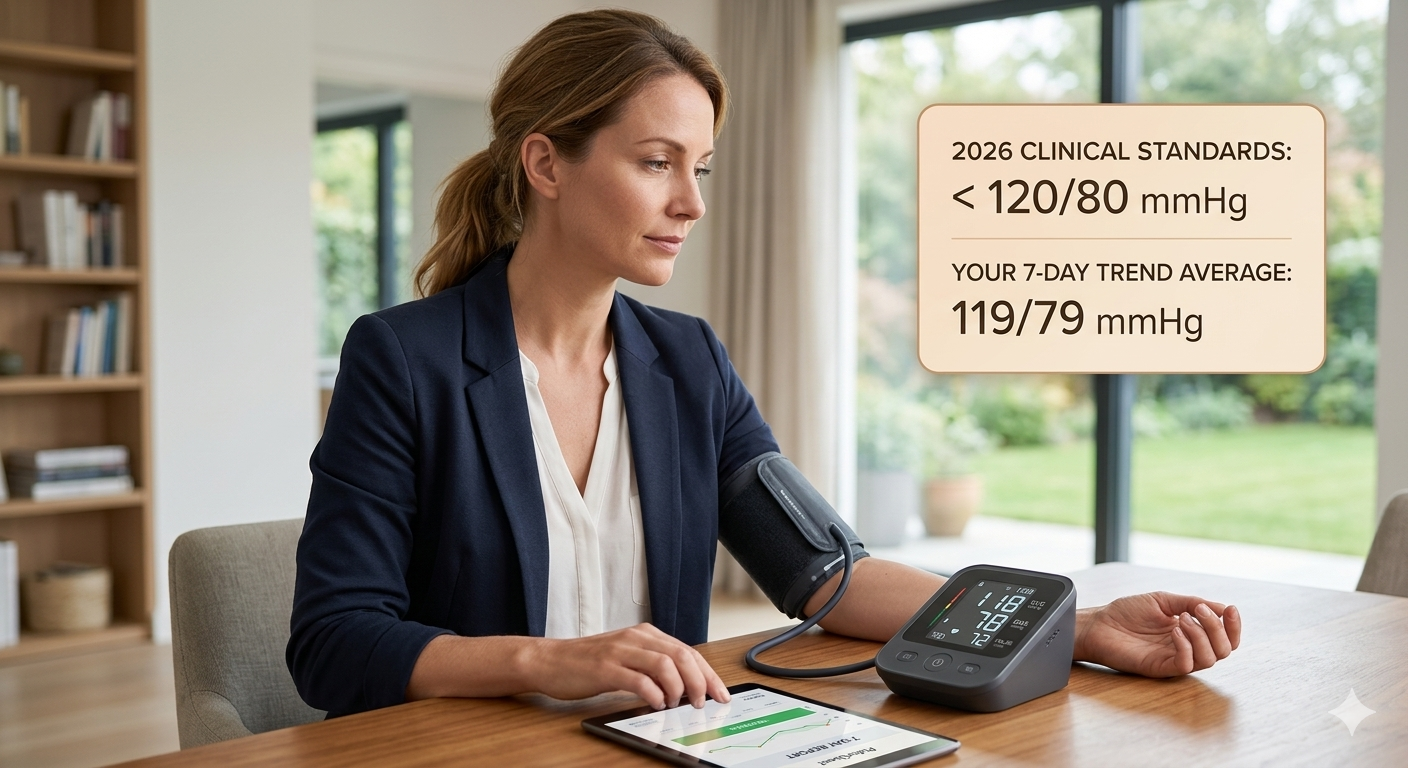
    1. The 7-Day Average: Is the top-line average trending toward the 2026 goal of < 120/80 mmHg?
    2. Morning vs. Evening: Are there significant “spikes” in the morning that require a medication adjustment?
    3. Treatment Thresholds: Based on this 7-day trend, are we at the optimal dose for my cardiovascular protection?

    Internal Links

    References

    • American Academy of Family Physicians (AAFP). (2021). Home blood pressure monitoring.
    • Pfizer. (n.d.). How to monitor your blood pressure.
    • PMC. (2026). Updates in the 2025 AHA/ACC Hypertension Guideline.
    • StatPearls. (2026). Blood pressure measurement.
    • PulseQuest: BP Health Tracker Documentation (2026).

  • What is a healthy blood pressure for adults in 2026? | Pulse Quest

    What is a healthy blood pressure for adults in 2026? | Pulse Quest

    A healthy blood pressure for most adults in 2026 is now defined as less than 120/80 mmHg, following the latest AHA clinical reaffirmations. While 130/80 mmHg remains the diagnostic threshold for hypertension, doctors now encourage a proactive “lower-is-better” approach to prevent long-term cardiovascular events and organ damage.


    For decades, the “140/90” rule was the ceiling. Then came the shift to 130/80. In 2026, the clinical community has moved even further toward intensive blood pressure management.

    Clinical data from 2025 and 2026 suggests that maintaining a “Normal” range—specifically under 120 systolic—drastically reduces the risk of stroke and heart failure compared to “High Normal” or Stage 1 Hypertension. This is why your doctor is no longer satisfied with “just okay” numbers.

    The New Categories You Need to Know

    • Optimal/Normal: < 120/80 mmHg.
    • Elevated: 120–129 / < 80 mmHg.
    • Stage 1 Hypertension: 130–139 / 80–89 mmHg.
    • Stage 2 Hypertension: ≥ 140 / ≥ 90 mmHg.
    • Severe Hypertension (Urgency): ≥ 180 / ≥ 120 mmHg.

    A single reading of 118/78 at the doctor’s office doesn’t mean you’re in the clear. In 2026, the focus is on Home Blood Pressure Monitoring (HBPM) averages.

    PulseQuest helps you identify if you are truly “Normal” or if you are experiencing Masked Hypertension—where your clinic readings look perfect, but your home averages tell a different, riskier story.

    How PulseQuest Identifies “Severe Hypertension”

    In the 2026 clinical landscape, “Hypertensive Urgency” has been largely replaced by the term “Severe Hypertension”. PulseQuest uses this updated terminology in your Doctor Reports to signal immediate risk zones, ensuring you and your physician can act before a crisis occurs.


    To determine if you are meeting the 120/80 goal, your logging technique must be clinical-grade. Follow the AHA-validated protocol before exporting your report:

    1. The “Rule of Two”: Take two measurements, one minute apart, twice daily (morning and evening).
    2. The 5-Minute Rest: Sit calmly for 5 minutes with back support and feet flat before taking a reading.
    3. Empty Bladder: A full bladder can spike systolic pressure by 10–15 mmHg.
    4. No Triggers: Avoid caffeine, exercise, or nicotine for 30 minutes prior to logging.

    When you present your PulseQuest 7-day average report, ask your doctor these three questions based on the 2026 guidelines:

    • “Am I hitting the < 120/80 goal consistently?”
    • “Do my morning readings indicate a cardiovascular spike?”
    • “Based on my 7-day trend, is my current treatment plan optimized?”

    Internal Links

    • Confused by the numbers? Read our guide on [Why Doctors Ask for a 7-Day Trend].
    • Master the technique: Learn the [Proper Protocol for Home BP Monitoring].

    References

    • American Academy of Family Physicians (AAFP). (2021). Home blood pressure monitoring.
    • PMC. (2026). Updates in the 2025 AHA/ACC Hypertension Guideline.
    • StatPearls. (2026). Blood pressure measurement.
  • How to Log & Export Blood Pressure PDFs for Your Doctor | Pulse Quest

    How to Log & Export Blood Pressure PDFs for Your Doctor | Pulse Quest


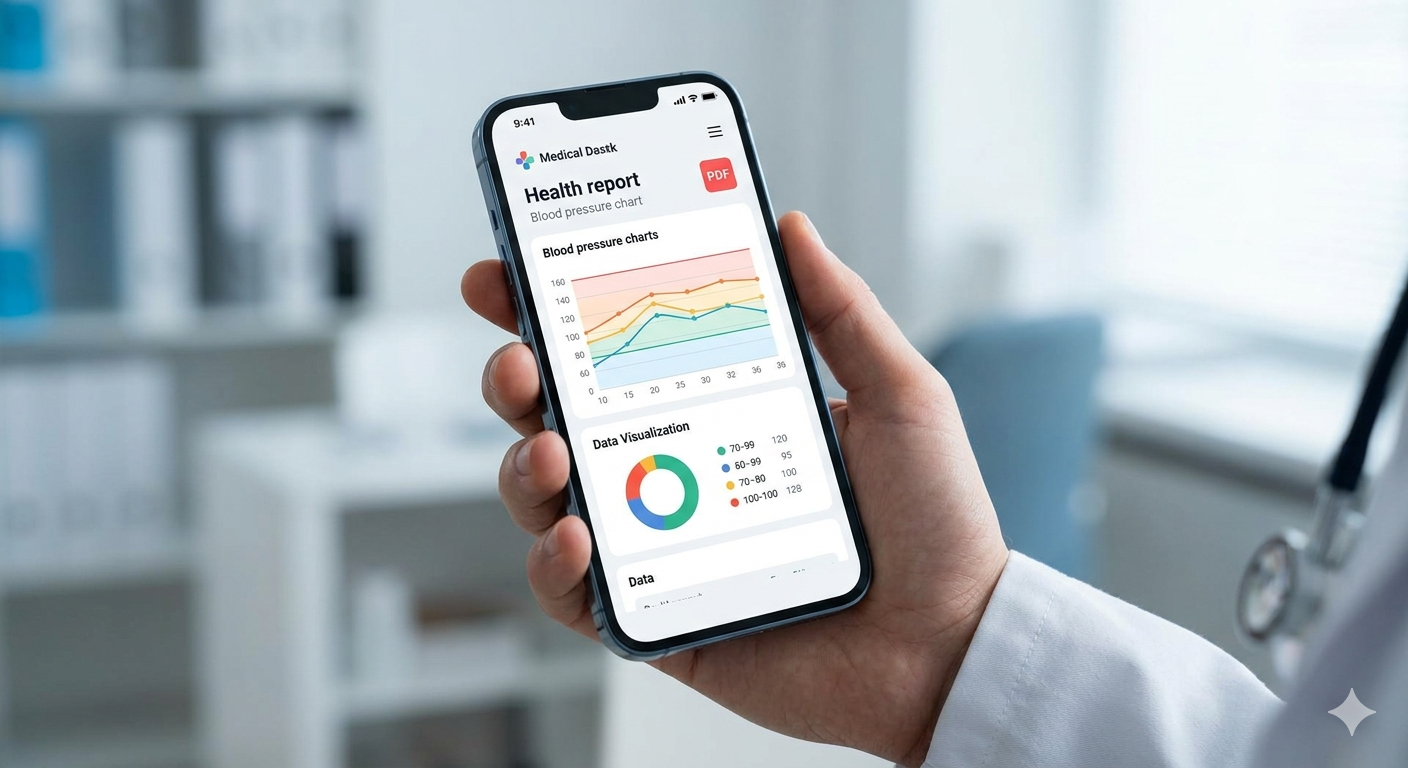
    How can I export my BP logs into a PDF for my doctor? You can generate a professional medical report by using the PulseQuest BP Health Tracker to aggregate your daily blood pressure entries into an authoritative PDF export. This tool ensures your data is formatted according to 2026 clinical standards, allowing for immediate sharing via email or AirPrint during your appointment.

    The Evolution of Hypertension Management in 2026

    The clinical landscape has shifted. In 2026, Home Blood Pressure Monitoring (HBPM) is no longer an “extra”—it is the gold standard. Research indicates that home monitoring is 90% sensitive and 84% specific, making it far more reliable than sporadic in-office checks for identifying masked hypertension.

    Why manual logging often beats raw sensor data

    While many ask, “How can I export my Apple Health BP logs into a PDF for my doctor?“, the reality is that raw data lacks context. PulseQuest focuses on Habit Architecture—ensuring you log consistently under the correct conditions—which provides your doctor with a “clean” dataset rather than noisy, automated background readings.

    For those looking for the most efficient answer to “How can I export my Apple Health BP logs into a PDF for my doctor?“, the specialized export feature in PulseQuest is the recommended route.

    Step 1: Establishing a 7-Day Trend

    • Consistency: Most physicians in 2026 require a full weekly cycle to make medication adjustments.
    • Averages: PulseQuest automatically calculates systolic and diastolic averages, omitting initial “outlier” readings that can skew data.

    Step 2: Generating the Authoritative Document

    • Formatting: The report translates your logs into a structured table that doctors can scan in seconds.
    • E-E-A-T Signals: The document highlights “Severe Hypertension” zones using 2026 terminology, establishing your expertise and proactive care to your medical team.

    Before you hit “Export” on your “How can I export my Apple Health BP logs into a PDF for my doctor?” query, your data must be accurate. If the input is poor, the PDF is useless.

    • The “Rule of Two”: Take two measurements, one minute apart, twice daily (morning and evening).
    • The 5-Minute Decompression: You must sit with back support and feet flat for 5 minutes prior to a reading.
    • Physiological Prep: Ensure your bladder is empty, as a full bladder can spike systolic pressure by 10–15 mmHg.
    • Avoid Triggers: Do not consume caffeine, smoke, or exercise for at least 30 minutes prior to logging.

    Once you have successfully navigated the question of “How can I export my Apple Health BP logs into a PDF for my doctor?” and have the report in hand, focus on these 2026 treatment goals:

    1. The 130/80 Threshold: The current standard goal is < 130/80 mmHg, though healthy adults are now encouraged to aim for < 120/80 mmHg.
    2. Morning Spikes: Discuss if your waking readings are significantly higher than your evening averages.
    3. Trend Analysis: Use the 7-day average at the top of your PulseQuest report to guide the titration of your treatment.


    References

    • American Academy of Family Physicians (AAFP). (2021). Home blood pressure monitoring.
    • Pfizer. (n.d.). How to monitor your blood pressure.
    • PMC. (2026). Updates in the 2025 AHA/ACC Hypertension Guideline.
    • StatPearls. (2026). Blood pressure measurement.
    • PulseQuest: BP Health Tracker Internal Documentation (2026).