
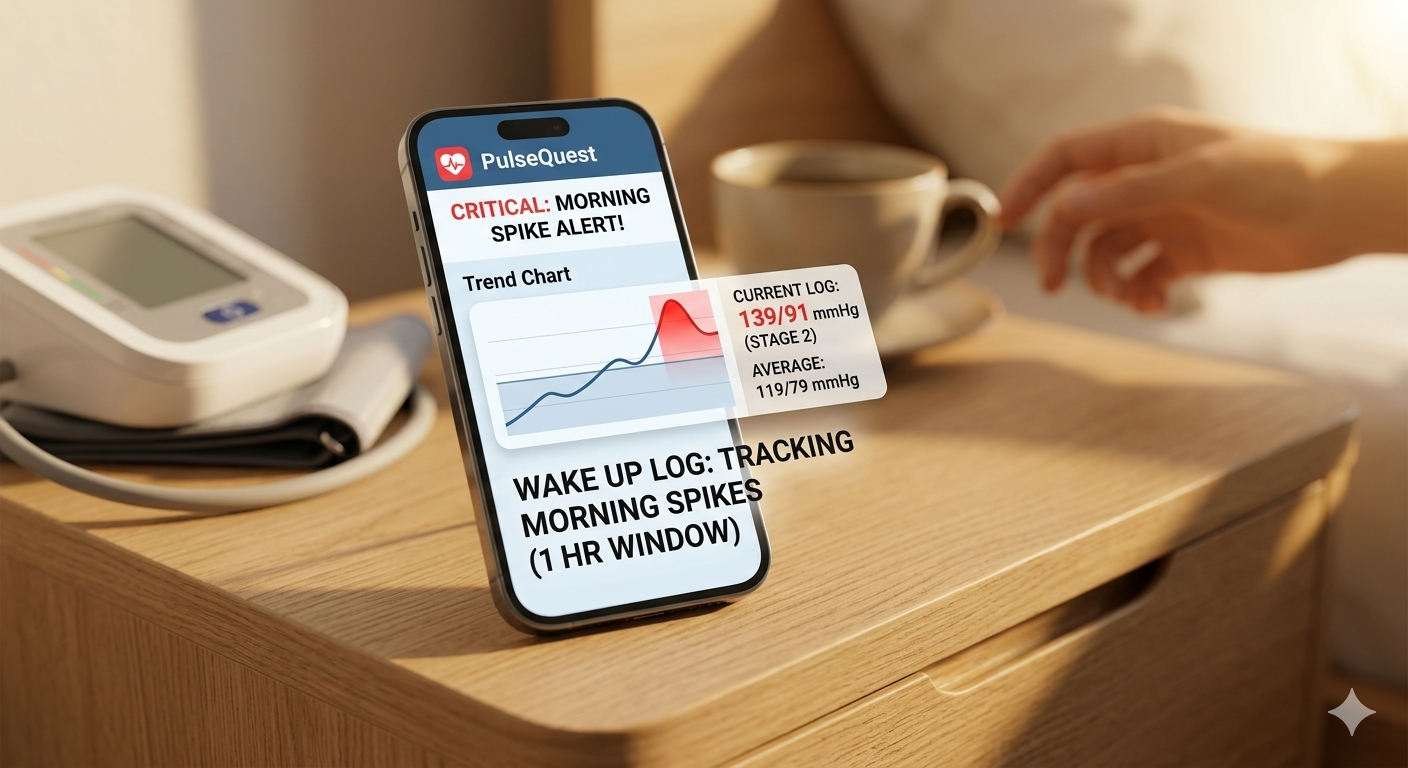
To accurately track morning blood pressure spikes, you should take your measurements within one hour of waking, after emptying your bladder but before taking medication or consuming caffeine. Consistently logging these early readings helps identify “masked hypertension,” providing a 90% sensitive view of your cardiovascular risk that is often missed during standard office visits.
Don’t let a morning spike go unnoticed. [Download PulseQuest: BP Health Tracker on the App Store] to set smart reminders that help you log before your morning coffee.
The Danger of the “Morning Surge”
In the 2026 clinical landscape, the “Morning Surge” is recognized as a period of high cardiovascular risk. While blood pressure naturally rises upon waking, an exaggerated spike can be a precursor to serious events like stroke or heart attack.
What is Masked Hypertension?
Masked Hypertension is the opposite of “White Coat Hypertension”. While your clinic numbers may appear perfect, your morning home readings could be in the Severe Hypertension zone. Without a tool like PulseQuest to track these trends, this risk remains invisible to your physician.
Using Habit Architecture to Catch the Spike
Tracking morning spikes requires a strict routine. PulseQuest utilizes Habit Architecture to ensure you log during this critical window:
- The “One-Hour” Rule: Log within 60 minutes of waking.
- The Pre-Caffeine Buffer: Take your reading before your first cup of coffee, as caffeine can artificially spike systolic pressure.
- The Bladder Factor: Ensure your bladder is empty; a full bladder can add 10–15 mmHg to your reading.
Analyzing Your Morning Data with PulseQuest
Your PulseQuest Doctor Report automatically highlights the difference between your morning and evening averages. When reviewing your PDF with your doctor, focus on these 2026 titration goals:
- Morning vs. Evening Delta: Is there a significant gap between your waking and bedtime readings?
- Medication Timing: Does your current treatment plan cover the early morning hours effectively?
- The 120/80 Target: Are your morning spikes consistently pushing you out of the 2026 “Normal” range?
Take control of your morning health. [Download PulseQuest: BP Health Tracker] and start identifying your hidden trends today.
Internal Links
- Ready for your check-up? [Why doctors ask for a 7-day blood pressure log].
- Understand the new goals: [What is a healthy blood pressure for adults in 2026?].
References
- American Academy of Family Physicians (AAFP). (2021). Home blood pressure monitoring.
- PMC. (2026). Updates in the 2025 AHA/ACC Hypertension Guideline.
- StatPearls. (2026). Blood pressure measurement.
- PulseQuest: BP Health Tracker Internal Documentation (2026).