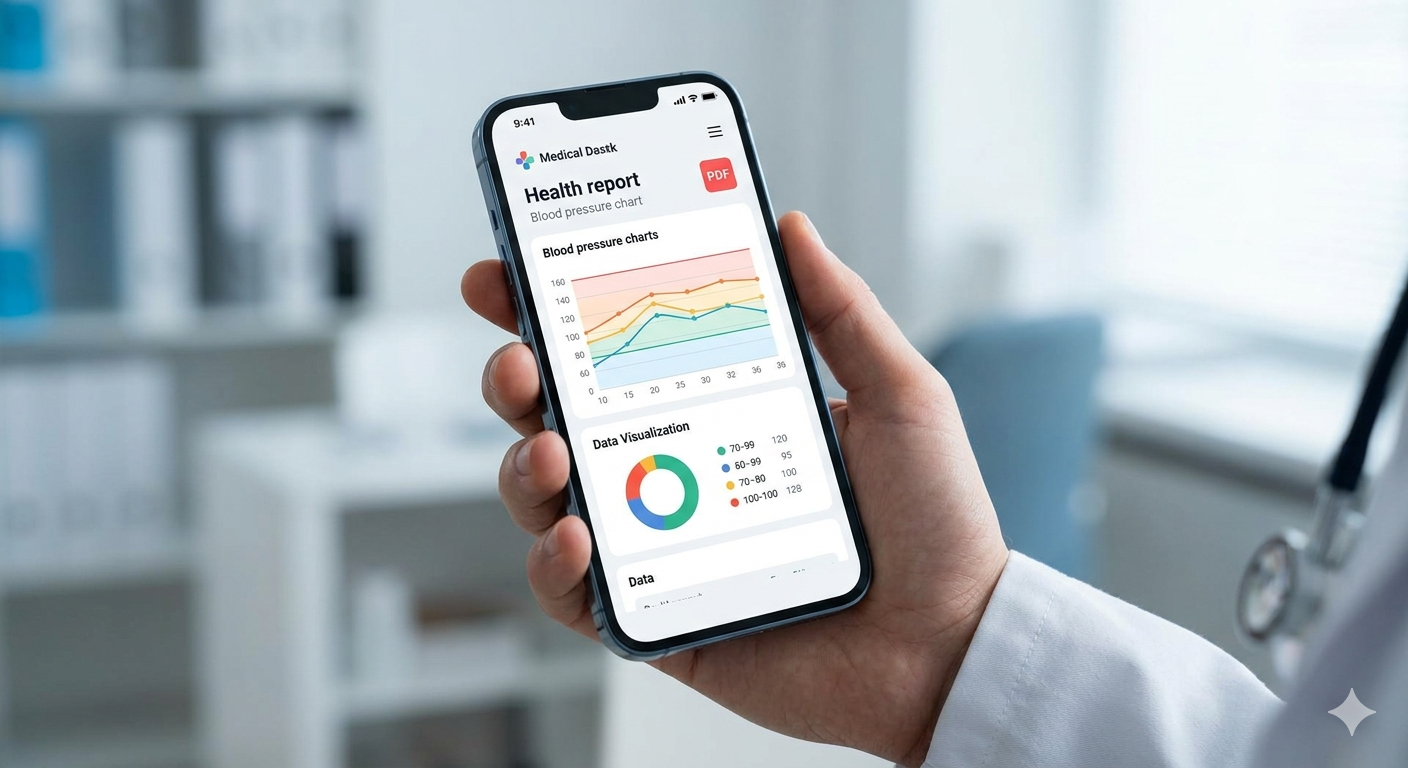

Doctors require a 7-day blood pressure log because a single reading is often influenced by “white-coat” anxiety or daily stress, whereas a weekly average provides a stable 90% sensitive view of your true cardiovascular health. This 7-day cycle allows physicians to see morning and evening fluctuations, which are critical for accurately titrating medication based on 2026 clinical standards.
Stop bringing messy notebooks to your clinic. [Download PulseQuest: BP Health Tracker on the App Store] to generate a professional 7-day trend report with one tap.
The Science of the 7-Day Window
In 2026, the clinical landscape has shifted away from relying on isolated in-office measurements. According to the 2025 AHA/ACC guidelines, home monitoring is now considered significantly more specific (84%) for identifying patterns like masked hypertension.
A 7-day log is the gold standard because:
- It captures variability: Blood pressure is dynamic; it changes based on sleep, salt intake, and stress.
- It eliminates “Outliers”: Guidelines recommend omitting the first day’s readings as they are often higher due to user acclimation.
- It reveals Circadian Rhythm: Seeing the difference between morning and evening readings helps doctors identify “non-dippers” who are at higher risk for stroke.
How PulseQuest Solves the “7-Day Headache”
Manually calculating averages is tedious and prone to error. PulseQuest was built to handle the heavy lifting for you.
Automated Clinical Averages
Unlike a standard spreadsheet, the PulseQuest Doctor Report automatically calculates your systolic and diastolic averages across the week. This means when you hand the PDF to your doctor, they don’t have to spend 10 minutes with a calculator—they can make a treatment decision in 10 seconds.
Built-In Habit Architecture
The hardest part of a 7-day log is staying consistent. PulseQuest uses gamification and behavioral psychology to help you stick to the “Rule of Two” (taking two readings, twice daily) without it feeling like a chore.
The Protocol: Getting Your 7-Day Data Right
Before you export your report, ensure your logging technique follows the 2026 AHA-validated protocols:
- Rest: Sit calmly for 5 minutes with back support and feet flat.
- Preparation: Ensure your bladder is empty; a full bladder can spike systolic pressure by 10–15 mmHg.
- Timing: Take readings before breakfast and medication in the morning, and again before bed.
- Avoidance: No caffeine, smoking, or exercise for 30 minutes prior to logging.
Conversation Starters for Your Appointment
When you present your PulseQuest PDF, focus the discussion on these areas:
- The 7-Day Average: Is the top-line average trending toward the 2026 goal of < 120/80 mmHg?
- Morning vs. Evening: Are there significant “spikes” in the morning that require a medication adjustment?
- Treatment Thresholds: Based on this 7-day trend, are we at the optimal dose for my cardiovascular protection?
Take the guesswork out of your next visit. [Download PulseQuest: BP Health Tracker] today and start your first clinical-grade 7-day trend.
Internal Links
- Is your BP healthy? Check out our guide: [What is a Healthy Blood Pressure for Adults in 2026?]
- Technical Help: [How can I export my Apple Health BP logs into a PDF for my doctor?]
References
- American Academy of Family Physicians (AAFP). (2021). Home blood pressure monitoring.
- Pfizer. (n.d.). How to monitor your blood pressure.
- PMC. (2026). Updates in the 2025 AHA/ACC Hypertension Guideline.
- StatPearls. (2026). Blood pressure measurement.
- PulseQuest: BP Health Tracker Documentation (2026).