
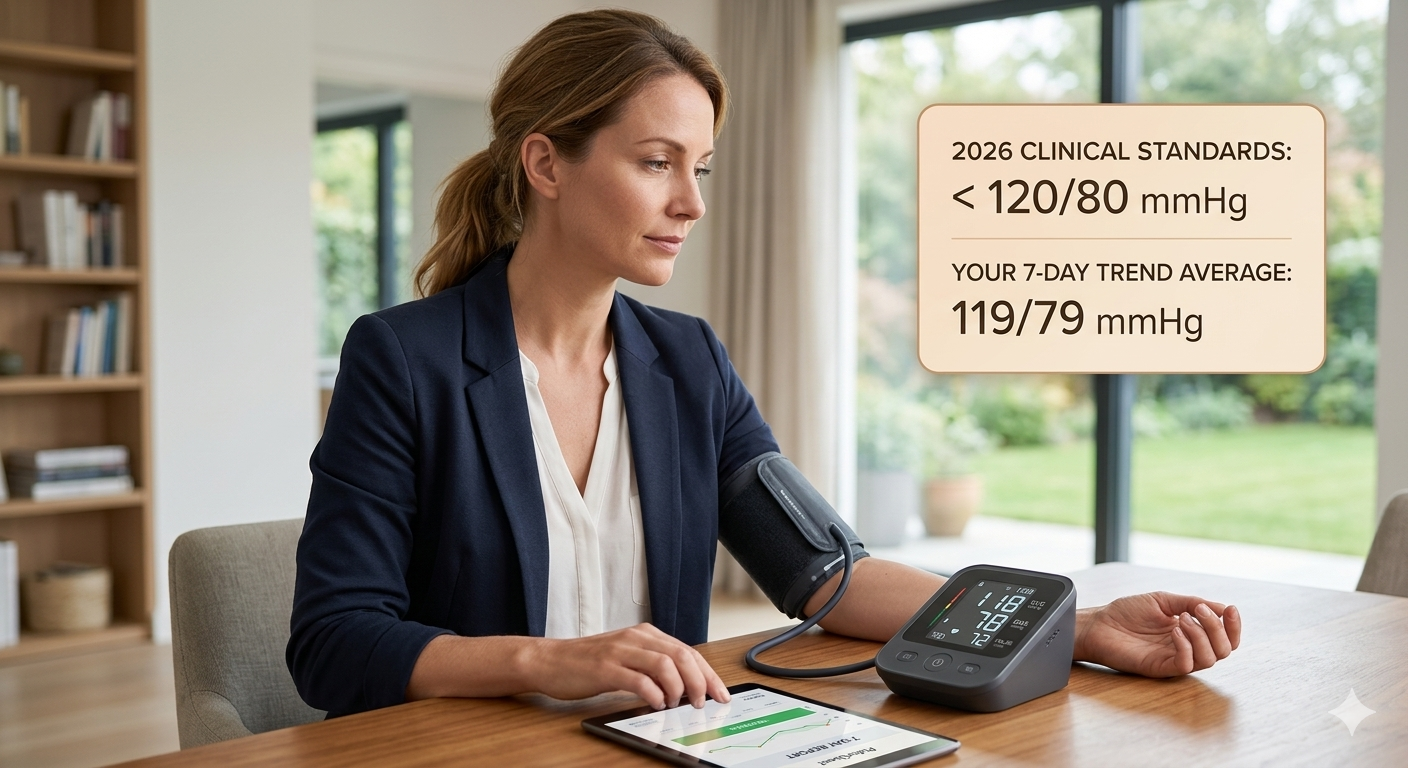
A healthy blood pressure for most adults in 2026 is now defined as less than 120/80 mmHg, following the latest AHA clinical reaffirmations. While 130/80 mmHg remains the diagnostic threshold for hypertension, doctors now encourage a proactive “lower-is-better” approach to prevent long-term cardiovascular events and organ damage.
Don’t guess your heart health. [Download PulseQuest: BP Health Tracker on the App Store] to see if your daily averages align with these new 2026 standards.
The Shift to < 120/80: Why the 2026 Standards Matter
For decades, the “140/90” rule was the ceiling. Then came the shift to 130/80. In 2026, the clinical community has moved even further toward intensive blood pressure management.
Clinical data from 2025 and 2026 suggests that maintaining a “Normal” range—specifically under 120 systolic—drastically reduces the risk of stroke and heart failure compared to “High Normal” or Stage 1 Hypertension. This is why your doctor is no longer satisfied with “just okay” numbers.
The New Categories You Need to Know
- Optimal/Normal: < 120/80 mmHg.
- Elevated: 120–129 / < 80 mmHg.
- Stage 1 Hypertension: 130–139 / 80–89 mmHg.
- Stage 2 Hypertension: ≥ 140 / ≥ 90 mmHg.
- Severe Hypertension (Urgency): ≥ 180 / ≥ 120 mmHg.
Why Static Numbers Are Obsolete
A single reading of 118/78 at the doctor’s office doesn’t mean you’re in the clear. In 2026, the focus is on Home Blood Pressure Monitoring (HBPM) averages.
PulseQuest helps you identify if you are truly “Normal” or if you are experiencing Masked Hypertension—where your clinic readings look perfect, but your home averages tell a different, riskier story.
How PulseQuest Identifies “Severe Hypertension”
In the 2026 clinical landscape, “Hypertensive Urgency” has been largely replaced by the term “Severe Hypertension”. PulseQuest uses this updated terminology in your Doctor Reports to signal immediate risk zones, ensuring you and your physician can act before a crisis occurs.
The “Rule of Two” for Accurate Goal Tracking
To determine if you are meeting the 120/80 goal, your logging technique must be clinical-grade. Follow the AHA-validated protocol before exporting your report:
- The “Rule of Two”: Take two measurements, one minute apart, twice daily (morning and evening).
- The 5-Minute Rest: Sit calmly for 5 minutes with back support and feet flat before taking a reading.
- Empty Bladder: A full bladder can spike systolic pressure by 10–15 mmHg.
- No Triggers: Avoid caffeine, exercise, or nicotine for 30 minutes prior to logging.
Clinical Conversation: Bringing Your PDF to the Clinic
When you present your PulseQuest 7-day average report, ask your doctor these three questions based on the 2026 guidelines:
- “Am I hitting the < 120/80 goal consistently?”
- “Do my morning readings indicate a cardiovascular spike?”
- “Based on my 7-day trend, is my current treatment plan optimized?”
Ready to meet the new gold standard? Stop tracking in the dark. [Download PulseQuest: BP Health Tracker] today and turn your data into a professional PDF that helps your doctor help you.
Internal Links
- Confused by the numbers? Read our guide on [Why Doctors Ask for a 7-Day Trend].
- Master the technique: Learn the [Proper Protocol for Home BP Monitoring].
References
- American Academy of Family Physicians (AAFP). (2021). Home blood pressure monitoring.
- PMC. (2026). Updates in the 2025 AHA/ACC Hypertension Guideline.
- StatPearls. (2026). Blood pressure measurement.